Do you apply primer all over your face?
By Emily Ross •
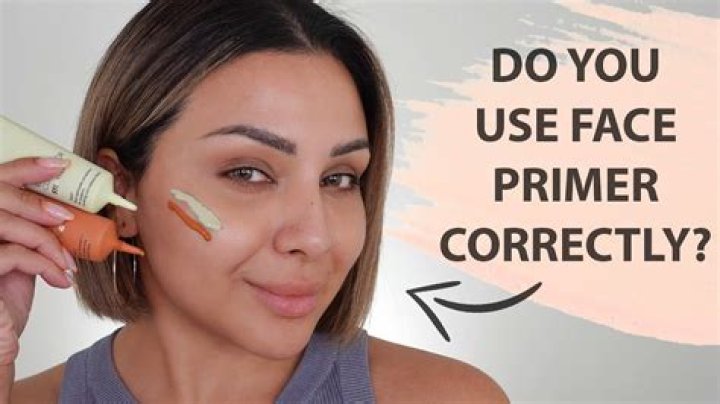
Not applying primer all over the face.
Greenberg says that if you don't put primer everywhere you're planning to put foundation, you're asking for trouble. Some of your makeup will go on more evenly than the rest, and some will probably wear off more quickly, creating a patchy, uneven mess.Do you put primer all over?
To apply a face primer, it is best applied using your fingertips. Simply use a peanut-sized amount and blend all over your face after applying moisturizer.Do you put primer on before moisturizer or after?
The truth is, you should always apply moisturizer before reaching for primer (seriously, always). As we mentioned above, the purpose of a moisturizer is to lock in moisture to keep dryness at bay. If you apply primer first, you run the risk of sporting dry, lackluster skin.How long do you let primer set before applying foundation?
Let the primer dry before putting on foundation. Wait about two to three minutes for the primer to soak into the skin before adding in another layer of makeup. What is this? Some primers or creams have a rich texture and they might need some time to set on the skin.Can you wear primer by itself?
Can you use primer without makeup? You can absolutely use a primer without makeup! They are fantastic for that “I'm not wearing any makeup” makeup look. They offer a smooth complexion without the heaviness of foundation, and they neutralize redness from acne and irritation.How to Apply Primer | Makeup Tricks
What is the purpose of a primer?
Primer creates an extra layer between your skin and makeup. Priming products are predominantly used to help makeup last longer, smooth the skin's surface, and even out the skin tone.What do you put after primer?
As much as it's debated, foundation comes after primer."Whether it's a BB cream, cream to powder, liquid or mousse foundation, is totally your choice," she said. "Afterwards though, I always suggest lightly off-setting your foundation with a powder foundation that warms your face."
Does primer go on after foundation?
Put simply, primer is exactly what its name implies: It's a preparatory product that's applied after your skin care to create an ideal canvas to hold onto whatever makeup comes afterward — like foundation, tinted moisturizer, or concealer.Can you put primer over moisturizer?
Primer is the first step of your makeup routine and it should be applied after moisturizer. Applying moisturizer first hydrates the skin and prepares it for makeup application. The first step in any beauty routine is making sure your skin is clean and well prepared for the makeup.Can you put primer over concealer?
Although some women apply concealer before their foundation, this should really be the second step in your routine. If you apply concealer first, it'll end up getting smudged and blended in with your makeup. For a perfect skin tone, put on primer, and then follow up with foundation.Is a primer really necessary?
“Primer is an essential step to make your makeup last and it acts like a protective barrier for your skin. The end result is more flawless, especially with primers that combine skincare and moisturising benefits,” says celebrity makeup artist Namrata Soni.What order does makeup go on your face?
The Correct Order To Apply Makeup Products
- Step 1: Primer & Color Corrector. ...
- Step 2: Foundation. ...
- Step 3: Concealer. ...
- Step 4: Blush, Bronzer, & Highlighter. ...
- Step 5: Eyeshadow, Eyeliner, & Mascara. ...
- Step 6: Eyebrows. ...
- Step 7: Lips. ...
- Step 8: Setting Spray or Powder.
Can we use primer daily?
Yes you can, but its a waste of the product as it is mainly used as a base, go for maybe a bb/cc cream on top of the primer to not let it go to waste.Do you have to put on primer before foundation?
Primer is often referred to as a base for Foundation or a Foundation primer. They are most commonly used to achieve a controlled matte finish. It isn't necessary to use a Primer before foundation, yet there are many benefits to adding this product into your makeup bag.Can primer clog pores?
When used properly, a great primer can be the difference between a lasts-all-day face and creased, faded makeup. Conversely, a primer not suited to your skin's individual needs — particularly for the acne-prone — can clog pores, triggering a wave of irritation and breakouts.What are the steps of makeup?
- Step 1: Moisturizer. Before you begin applying your makeup, take the time to prep your skin with a high-quality moisturizer. ...
- Step 2: Primer. ...
- Step 3: Liquid Foundation. ...
- Step 4: Concealer. ...
- Step 5: Foundation Powder. ...
- Step 6: Bronzer. ...
- Step 7: Blush. ...
- Step 8: Highlighter.