What is a typical bonus structure?
By Emily Ross •
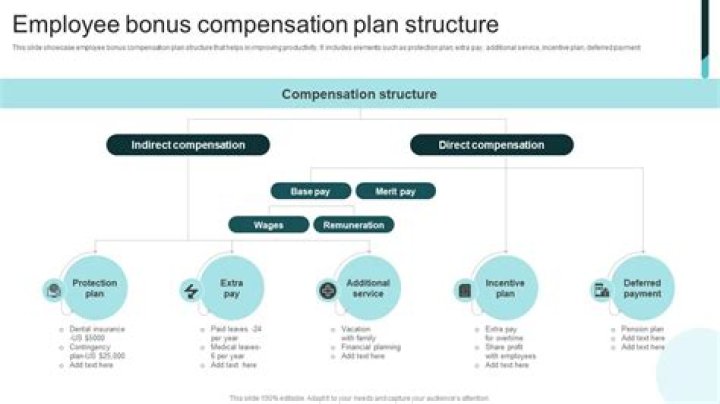
A company sets aside a predetermined amount; a typical bonus percentage would be 2.5 and 7.5 percent of payroll but sometimes as high as 15 percent, as a bonus on top of base salary. Such bonuses depend on company profits, either the entire company's profitability or from a given line of business.
What is a good percentage for a bonus?
What is a Good Bonus Percentage? A good bonus percentage for an office position is 10-20% of the base salary. Some Manager and Executive positions may offer a higher cash bonus, however this is less common.What is the average company bonus?
A normal year-end bonus will vary from position to position, but the average bonus pay in the U.S. is 11% of exempt employees' salaries, 6.8% of nonexempt employees' salaries, and 5.6% of hourly employees' salaries.How do you structure a performance bonus?
How to Structure the Employee Bonus Plan
- Put the employee bonus plan in writing. ...
- Base the bonus on results that are measurable or quantifiable. ...
- Give incentives to employees to meet goals. ...
- Be clear on the WHAT, the WHY, and the HOW. ...
- Make sure everybody gets something. ...
- Make the financial reward a strong enough incentive.
What is a typical performance bonus?
You may get a bonus one year, but nothing the next, so be sure you understand how your employer selects people to receive a year-end bonus. Executives tend to receive higher bonuses that can multiply based on performance, while most employees earn bonuses equal to 1% to 5% of their overall salary.How to Structure Bonus Plans
How do you negotiate bonus structure?
Your Guide to Negotiating the Best Compensation Package
- Make sure your negotiating points are reasonable and well-supported. ...
- Try to avoid negotiating with HR. ...
- Be clear on your absolute minimum. ...
- Have a strategy for dealing with counteroffers. ...
- Remember that prolonged haggling over little details is a bad sign.
Is it better to get a bonus or salary increase?
While pay raises typically reward longevity, bonuses are paid based on performance. Since the compensation is variable, a bonus can be reduced or eliminated if business conditions make it difficult or impossible to fund them.How do you distribute bonus fairly?
To reassure employees that you're distributing bonus payments fairly, sit down with employees (preferably one on one) and explain how you arrived at the bonus amount. It's critical that you do this with low performers — if they get a smaller slice (or no slice at all) of the bonus pie.What is a KPI bonus?
KPI Bonuses means bonuses payable under the annual, semi-annual and quarterly KPI bonus program of the Company.What makes a good bonus scheme?
Profit related bonuses should include a threshold profit level that must be reached before any payments are made. Bonuses should ideally be uncapped to drive further sales/performance.Should bonus be included in salary?
Deducting Employee Bonuses as a Business ExpenseIf you have some cash and expect to make a profit this year, it's a good time to pay bonuses to employees. In addition to receiving a business tax deduction for these benefit expenses, you also receive much goodwill from employees, especially around the holidays.
What are the different types of bonus?
Types of bonus
- Profit-sharing. Profit-sharing is a type of bonus where employees are given a percentage of the company's profit. ...
- Spot bonus. A spot bonus is awarded for exceptional performance on a certain task. ...
- Non-cash bonus. ...
- Referral bonus. ...
- Signing bonus. ...
- Milestone bonus. ...
- Project bonus. ...
- Attendance bonus.
What does a 10% bonus mean?
As an example, a company might pay one employee $50,000 a year and make them eligible for a 5% bonus if goals are met, but pay another employee $100,000 a year with a possible 10% bonus. Bonuses based on pay grade recognize that a senior employee may have a more significant impact on the company's performance.Are bonuses taxed differently than salary?
A bonus is always a welcome bump in pay, but it's taxed differently from regular income. Instead of adding it to your ordinary income and taxing it at your top marginal tax rate, the IRS considers bonuses to be “supplemental wages” and levies a flat 22 percent federal withholding rate.Are bonuses taxed higher?
Bonuses are taxed heavily because of what's called "supplemental income." Although all of your earned dollars are equal at tax time, when bonuses are issued, they're considered supplemental income by the IRS and held to a higher withholding rate.What are the 5 key performance indicators?
What Are the 5 Key Performance Indicators?
- Revenue growth.
- Revenue per client.
- Profit margin.
- Client retention rate.
- Customer satisfaction.
What is salary competitiveness ratio?
The Salary Competitiveness Ratio is the figure you get by dividing the average salary your company is currently offering by the average salary paid by one of your competitors.How do you measure incentives?
Lagging Indicators: How Do You Measure Incentive Outcomes?
- Overall sales increase.
- Sales increase for a specific product.
- Average order size.
- Average order frequency.
- Performance on satisfaction surveys.
- Customer retention rate.
- Number of referrals.
- Overall ROI.