Why is xanthan gum often used in gluten-free baking?
By Ava Bailey •
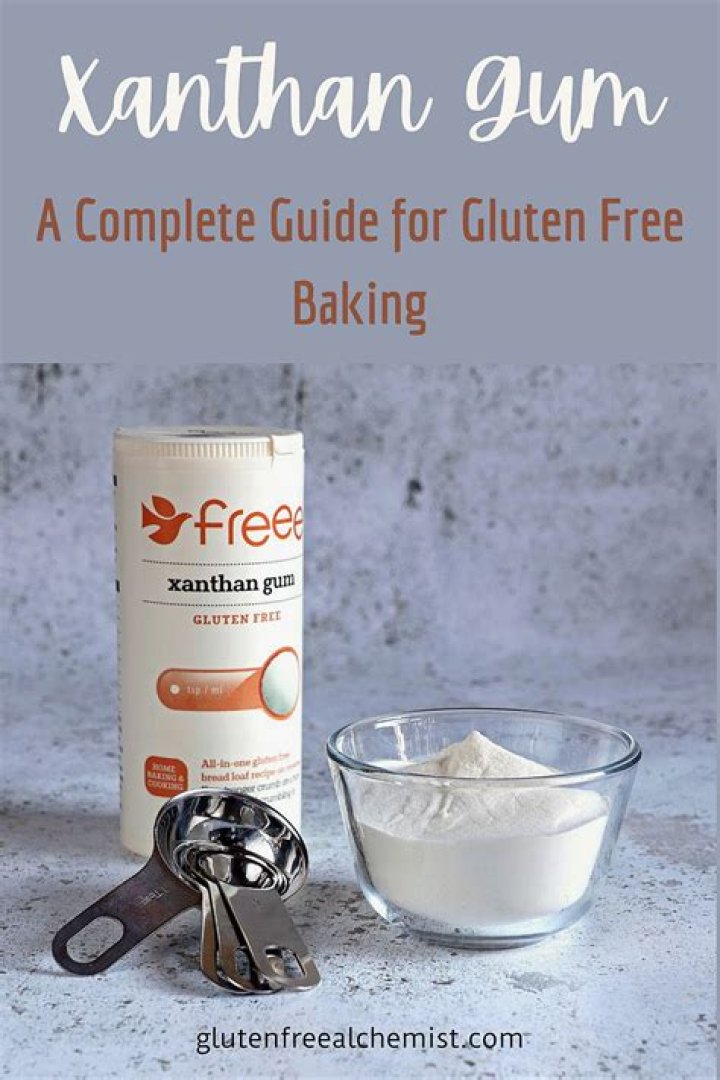
In gluten-free baking, we rely on xanthan gum to provide elasticity and stickiness in our doughs and batters. Since we don't have gluten present, we need something that acts as the binding agent for the flour, helps hold onto some moisture, and helps give the baked good some structure.
What is the purpose of xanthan gum?
Xanthan gum is a substance used in making some foods and medications. It has different effects in these products: It can add thickness, keep textures from changing, and hold ingredients in place. Xanthan gum is found in many types of medicines.What does xanthan gum do in gluten free cakes?
Xanthan gum is used to improve the texture and shelf life of gluten free products. It mimics gluten in terms of keeping the baked products moist and the texture soft. It comes in powder form which dissolves easily in water.What is the effect of xanthan gum in baking?
When used in baking, xanthan gum has two essential roles: Like gluten, xanthan gum helps bind things together, creating baked goods with a better structure. Xanthan gum locks in moisture so that baked goods won't dry out quickly.What happens if you leave xanthan gum out of a recipe?
Simply omitting gums from your recipes is an option, however, gums not only affect the appearance and texture of your baked goods but also taste. So if you want to avoid gums, then you really need to replace it with something else.Xanthan Gum | Bob's Red Mill | Gluten Free Baking
What's a good substitute for xanthan gum?
Whether you're in a pinch or would simply rather leave it out of your baked goods, here are 9 substitutes for xanthan gum.
- Psyllium husk. ...
- Chia seeds and water. ...
- Ground flax seeds and water. ...
- Cornstarch. ...
- Unflavored gelatin. ...
- Egg whites. ...
- Agar agar. ...
- Guar gum.
Why are my gluten-free cookies falling apart?
Because gluten-free cookies are a bit crumblier than typical cookie, they are prone to falling apart. One way to help your cookies cool without damaging them is to slide the entire sheet of parchment paper or nonstick baking mat right off the tray and onto a cooling rack.Does gluten free all purpose flour contain xanthan gum?
In addition to to the Sorghum and Tapioca Flours, the Gluten Free All Purpose Flour has Garbanzo Bean Flour, Potato Flour, and Fava Bean Flour for protein and body. There is no Xanthan Gum in this mixture. For most recipes you'd need to add Xanthan Gum to help bind together your batter/dough for the best texture.Does xanthan gum replace baking soda?
No, you cannot replace baking powder with xanthan gum. The acidic component of the baking powder reacts in liquid. This produces carbon dioxide bubbles which cause your baked goods to rise. On the other hand, xanthan gum has no leavening properties and is used to bind mixtures together.Does xanthan gum have a taste?
Xanthan gum is one of the most useful food additives around; it is effective in a wide range of viscosities, temperatures, and pH levels. It is easy to use, has no taste, and generally works quite well.Is xanthan gum good for you?
Xanthan gum is a popular additive for thickening, suspending and stabilizing. It's found in many foods and products, and appears to be safe for most people. It may even have health benefits when consumed in larger amounts, though these higher intake levels can also increase the risk of digestive problems.What are the side effects of xanthan gum?
Xanthan gum is safe when up to 15 grams per day are taken. It can cause some side effects such as intestinal gas (flatulence) and bloating. People who are exposed to xanthan gum powder might experience flu-like symptoms, nose and throat irritation, and lung problems.Does King Arthur gluten-free flour have xanthan gum?
Gluten-free flour: replacement blendWhen should you use gluten-free replacement flour in your recipe? The recipe wasn't formulated to be gluten-free, and typically doesn't call itself gluten-free. The recipe doesn't include xanthan gum in its list of ingredients.